To mark the 200th anniversary of Ludwig van Beethoven’s passing, the Leipzig Gewandhaus is staging a festival of unsurpassed international prestige. The
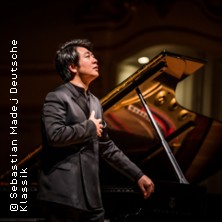
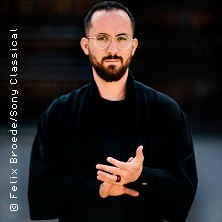
Beethoven Festival Leipzig 2027 features a complete cycle of the symphonies, world-renowned soloists such as Lang Lang, Igor Levit and Leonidas Kavakos,
chamber music with an exceptional roster of artists, a new version of Egmont, and projects that reimagine Beethoven’s music for the present day.
In 2027, the spotlight of the music world will shine brightly upon Leipzig: 200 years after the death of Ludwig van Beethoven, the Gewandhaus mounts a
festival which presents Beethoven not as a monument, but as a radically contemporary artist and a living source of inspiration for the artists of today.
The Festival opens with intense drama: Beethoven’s incidental music for Goethe’s Egmont, with a new libretto by celebrated author Michael Lentz
(commissioned by the Gewandhausorchester). This highly political play deals with oppression, the struggle for liberty and the indomitable spirit of resilience of the individual in the face of authoritarian power. Against the backdrop of current global conflicts, social tensions and challenges to democracy, this material takes on particular urgency in Michael Lentz’s new adaptation. Internationally celebrated theatre and film actor Tobias Moretti will narrate the drama.
In addition to the new version of the Egmont text, the Festival will feature a further world premiere commissioned by the Gewandhausorchester: Jörg
Widmann has taken Beethoven’s late fragment, Overture on B-A-C-H, as the foundation for a new orchestral work. The fact that Beethoven engaged with
the music of Bach can certainly be seen as a sign of considerable admiration. Widmann now carries this line of musical tradition forward into the present day, employing modern means – a contemporary dialogue between Bach, Beethoven and our own time.
The Festival is founded upon three main pillars: the performances of the symphonies and major instrumental concertos by the Gewandhausorchester,
conducted by Gewandhauskapellmeister Andris Nelsons and featuring internationally acclaimed soloists; Beethoven's chamber music interpreted by preeminent musicians of our age; projects that re-examine Beethoven’s Music and explore its contemporary relevance. The programme of the Festival spans an arch from forms of interpretation stemming from the past two centuries to crossover formats, jazz and even electronic perspectives of this great master's music.
The Festival assumes a particular historical dimension due to Beethoven’s close connection to the Gewandhausorchester: the orchestra was the first in the world to perform all nine of Beethoven’s symphonies as a cycle, indeed while the composer was still alive. The Festival builds on this foundation.
The 9th Symphony will be performed in a variety of settings: following the Festival at the Gewandhausorchester’s annual open-air Klassik airleben concerts, in which the many thousands in Rosental Park are invited to join in singing the final chorus, and preceding the Festival on the 1st of
January 2027 as a festive New Year’s Day concert in the Gewandhaus. Within the Festival itself, the symphony will be performed as part of a community engagement project with the Stegreif Orchestra, as well as in a version for soloists, choir, two pianos and timpani (based on Franz Liszt’s arrangement),
featuring, among others, the Gewandhaus Choir and the renowned piano duo Pavel Kolesnikov & Samson Tsoy.
In addition to the symphonies, the Festival programme also focuses on works premiered by the Gewandhausorchester, including the Triple Concerto in C major, Op. 56, for Piano, Violin, Cello and Orchestra, and the Piano Concerto No. 5 in E-flat major, Op. 73 (Emperor).
Among the Festival’s exceptional roster of performers are Lang Lang, Leonidas Kavakos, Igor Levit, Pablo Ferrández, Anna Prohaska, Julia Fischer, Michael Wollny, the Stegreif Orchestra, the Gewandhaus Octet and the Gewandhaus Quartet, which will perform Beethoven’s string quartet Oeuvre in its entirety. In the Gewandhaus Quartet's exploration of these masterpieces, the generational perspective promises to be particularly fascinating: with rejuvenated membership – with the Primarius as unifying element – a new generation of musicians engages with Beethoven’s radical legacy.
The Beethoven Festival 2027 is an artistic statement: a statement of the power of tradition, of the open mindedness of the Gewandhaus, and of a masterful composer whose music, even 200 years after his passing, has lost none of its political and social explosiveness.